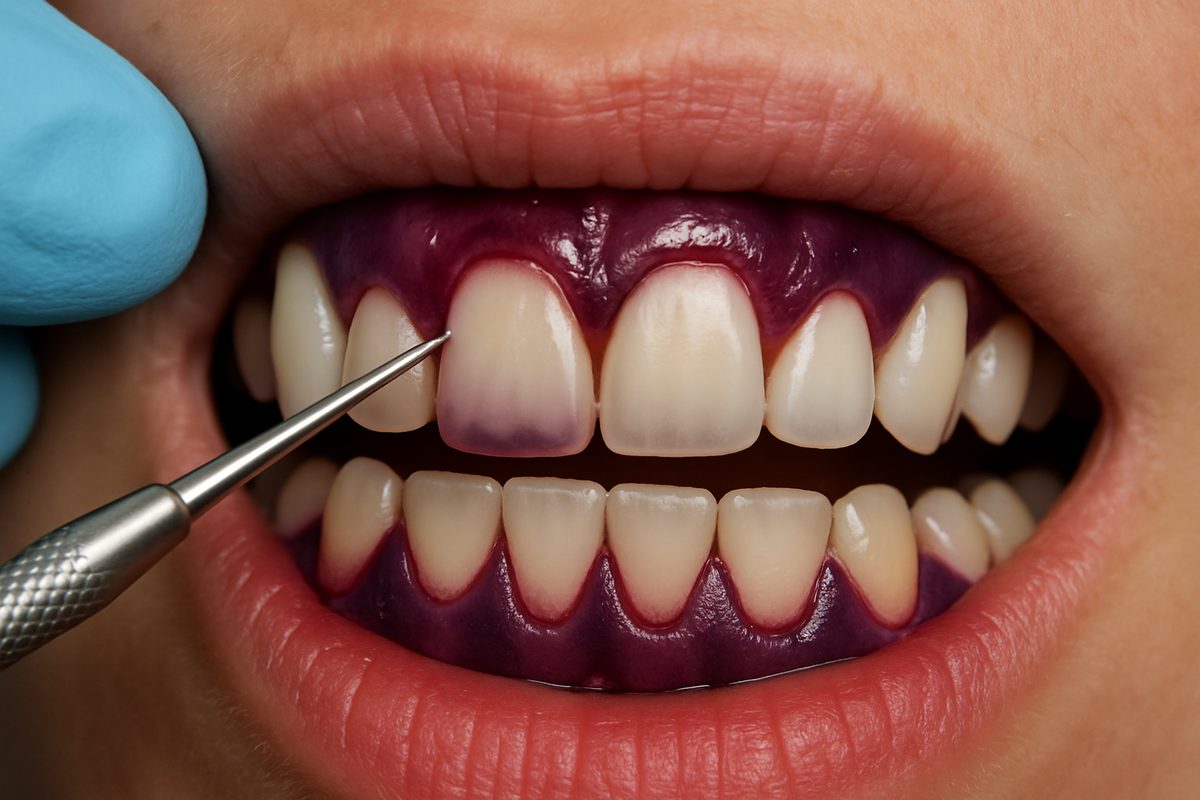
Noticing gums dark purple can be alarming. If you or a loved one sees gums dark purple near Rochester, NY, this guide explains common causes, how to tell if the change is serious, when to seek care, how clinicians diagnose the problem, treatment options, and steps you can take while you wait for an appointment. This is for people who want clear, practical info about possible gum disease and other conditions that change gum color.
Common causes of gums dark purple near Rochester, NY
Poor oral hygiene and plaque buildup
Leftover plaque hardens into tartar and irritates gum tissue. That irritation can cause inflammation and darker coloring. If you see gums dark purple near Rochester, NY in areas where you brush less, plaque and tartar are often to blame.
Gum disease (gingivitis and periodontitis)
Infection and chronic inflammation can change gum color to red, purple, or bluish. Gingivitis is reversible with cleaning; periodontitis involves deeper tissue and bone loss. Widespread purple discoloration plus bleeding or recession raises concern for active gum disease.
Other causes: trauma, medications, and systemic conditions
Local bruising, recent dental work, or biting can darken a spot. Blood-thinning medications or conditions that reduce oxygen in the blood (cyanosis) may tint gums. Smoking, oral pigmentations like amalgam tattoos, vascular lesions, and anemia are other possibilities.
How to tell if gums dark purple means serious gum disease
Key symptoms that suggest active disease
Look for bleeding with brushing, persistent swelling, bad breath, gum recession, and loose teeth. Each suggests infection or tissue breakdown. If dark purple gum color comes with these signs, see a dental professional promptly.
Localized vs. widespread color change
A single dark spot after injury or a tattoo-like mark is often harmless. Generalized or bilateral discoloration across many teeth more likely signals inflammation, systemic issues, or advanced gum disease.
When to seek care for gums dark purple
Rapid swelling, severe pain, fever, pus, or sudden tooth loosening are urgent — seek care within 24 hours. For persistent discoloration without severe symptoms, schedule a dental or periodontal exam within one to two weeks.
How professionals diagnose causes of gums dark purple near Rochester, NY
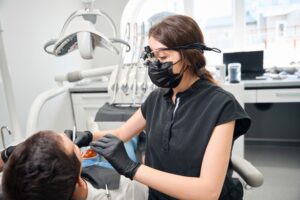
Clinical exam and periodontal probing
Dentists measure pocket depths, check bleeding, and inspect tissue texture and color to assess disease severity.
Imaging and advanced tools
X-rays or CBCT scans show bone loss. A periscope (dental endoscope) can visualize plaque below the gumline that’s not visible otherwise.
When medical tests or referrals are needed
If a systemic cause is suspected, blood tests or a physician referral may be recommended to check for anemia, clotting issues, or cardiopulmonary problems.
Treatment options for gums dark purple near Rochester, NY
Non-surgical care
Professional cleaning, scaling and root planing, targeted antibiotics, and laser-assisted therapies can reduce infection and restore normal color.
Surgical and regenerative options
For advanced disease, gum surgery, grafting, or regenerative procedures may be needed. In cases of lost teeth, implant or restorative work can follow once infection is controlled.
Why a periodontist can help with persistent gums dark purple
Progressive Implantology & Periodontics provides advanced diagnostics and treatments for persistent gum color changes. The team uses LANAP® laser therapy, CBCT imaging, and periscope-assisted care to pinpoint causes and offer minimally invasive solutions. Dr. Suresh Goel’s experience in laser periodontics helps manage complex or recurring cases.
Simple steps you can take at home while awaiting care
Improve brushing and flossing, avoid smoking, stop using harsh mouthwashes that irritate tissue, and keep a photo log of changes. Don’t try unproven home treatments if you have pain, bleeding, or spreading discoloration.
Quick takeaways and next steps for people seeing gums dark purple near Rochester, NY
Red flags: bleeding, swelling, pus, loose teeth, or rapid change. Likely causes range from plaque and gum disease to medication effects or trauma. If discoloration is persistent or accompanied by other symptoms, schedule a periodontal evaluation to determine the cause and start appropriate treatment.